Year-End Checklist: What to Give Your Accountant
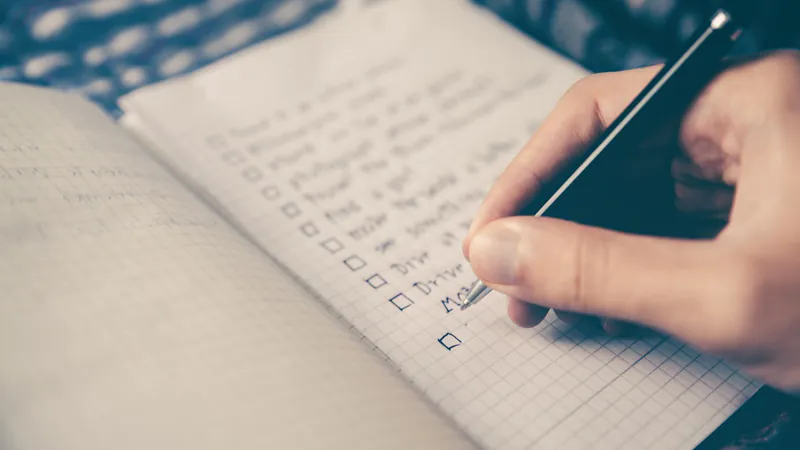
What to hand your accountant at year end: income and slips, expenses by category, receipts, mileage logbook, home office, GST/HST figures and instalments.
ReceiptOne Team
Quick answer
Give your accountant your income records and any slips, an expense summary by category with the receipts behind it, your mileage logbook, your home office figures, your GST/HST totals if you are registered, and the instalments you paid. Self-employed individuals have until June 15 to file, but any balance owing is due April 30, so aim to hand everything over well before April.
An accountant can only work with what you give them. A complete, organized package means fewer follow-up questions, a faster return and less chance of a missed deduction. This checklist covers what a sole proprietor in Canada should gather once the year closes, in the order it maps onto Form T2125.
The CRA rules and dates come from canada.ca; the pages are listed at the end. If you do your own return, the same checklist tells you what you need before you start.
The Checklist at a Glance
- Income records and any slips you received
- An expense summary by category
- The receipts behind the summary
- Your mileage logbook and vehicle costs
- Home office details
- GST/HST figures, if you are registered
- Instalments you paid during the year
- Notes on anything that changed
1. Income Records and Slips
Your accountant needs your gross income for the year: every invoice, payment and sale. The CRA says income records must show the date, amount and source of each item, supported by original documents such as sales invoices, receipts, deposit slips, fee statements and contracts. A list of invoices issued, with the amount and date paid, is the most useful format.
Include any information slips you received. Businesses that pay more than $500 in a calendar year to other businesses for services are required to report those fees to the CRA, usually on a T4A slip. Use the slips as a check against your own records rather than as your income total, since your records should cover everything you earned.
2. Expense Summary by Category
Total your business expenses by category, ideally matching the expense lines on Form T2125. Your accountant will regroup them if needed, but a categorized summary is far quicker to work from than a pile of receipts.
- Show only the business part of mixed-use expenses, with a note of the percentage and how you worked it out.
- List capital purchases, such as computers or equipment, separately with the date, seller and cost; these are claimed through capital cost allowance, not as expenses.
- If you claim input tax credits, show the GST/HST you paid separately from the expense amounts.
- Keep reimbursable expenses a client paid back clearly marked.
Not sure where an expense goes? Read our line-by-line T2125 guide.
3. The Receipts Behind the Summary
The summary is what goes on the return; the receipts are what support it. You do not send receipts to the CRA with your return, but you keep them in case it asks. Your accountant may want to see some, especially for large or unusual items.
Keep the year's records for six years from the end of the tax year they relate to, which for an individual is the calendar year. So your 2026 records stay with you until at least the end of 2032, longer if you file late. See our guide to CRA receipt rules.
4. Mileage Logbook and Vehicle Costs
If you use a vehicle for the business, bring:
- Your logbook, with the date, destination, purpose and kilometres of each business trip
- Odometer readings at the start and end of the year
- If you changed vehicles, the dates and odometer readings when you bought, sold or traded
- Total kilometres and business kilometres for each vehicle, kept separately for each one
- The year's operating costs: fuel, insurance, licence and registration, repairs, interest or lease payments
- The purchase details if you bought a vehicle during the year
If you use a simplified three-month logbook, include the base-year logbook too; the CRA asks you to keep it for six years from the end of the last year you use it. Read our mileage deduction guide.
5. Home Office Details
If you work from home, your accountant first needs to know which condition you meet: the workspace is your principal place of business, or you use it only for the business and regularly meet clients there. Then bring:
- The area of the workspace and the total area of your home
- Whether the space is also used for personal living, and the hours it is used for business
- Rent, or for owners, mortgage interest and property taxes
- Heating, electricity, home insurance and maintenance costs
- Any business-use-of-home amount carried forward from last year
Home office expenses cannot create or increase a business loss; anything you cannot use carries forward. See our home office deduction guide.
6. GST/HST Figures, If You Are Registered
If you are a GST/HST registrant, bring the GST/HST you charged on your sales, the GST/HST you paid on business purchases that you claim as input tax credits, and copies of the returns you filed during the year. The CRA says to keep copies of the purchase invoices or receipts that support your input tax credits.
If you file annually and you are a sole proprietor with a December 31 year-end and business income for the year, your GST/HST payment is due April 30 and your return is due June 15. If you are not registered, mention your total revenue; the CRA's small supplier limit is $30,000 in taxable supplies in a single calendar quarter or over four consecutive calendar quarters. Read our GST/HST tracking guide.
7. Instalments You Paid
List each income tax instalment you paid during the year, with the date and amount. Instalments are credited against the tax on your return, so missing one can make it look as if you owe more than you do. The CRA says you must pay instalments if your net tax owing is more than $3,000 ($1,800 in Quebec) in the current year and was also more than that in either of the two previous years. The usual due dates are March 15, June 15, September 15 and December 15, moved to the next business day when one falls on a weekend or public holiday.
8. Notes on What Changed
A short note saves your accountant from guessing. Mention anything new or unusual this year: you started or stopped the business, changed vehicles, moved, began working from home, registered for GST/HST, took on a large contract, or made a big equipment purchase.
Key Dates
Self-employed individuals have until June 15 to file their return, but any balance owing is due by April 30. If either date falls on a weekend or public holiday, it moves to the next business day. Because the payment comes first, your accountant needs your package early enough to work out what you owe before April 30, not just before June 15. See the current CRA deadlines.
If you kept up with a monthly review through the year, most of this checklist is already done. Use the month-end bookkeeping checklist.
Frequently Asked Questions
When should I give my records to my accountant? Well before April 30. Self-employed individuals file by June 15, but any balance owing is due by April 30, so your accountant needs time to work out the amount first.
Do I need to give my accountant every receipt? Usually a categorized summary is enough to prepare the return, with receipts available for anything they ask about. Keep all receipts for six years from the end of the tax year they relate to.
What if I did not receive a T4A slip from a client? Report the income anyway from your own records. Slips are a cross-check; your income records should cover everything the business earned.
What mileage records does my accountant need? Your logbook of business trips with date, destination, purpose and kilometres, your odometer readings at the start and end of the year, and your vehicle operating costs.
When is my GST/HST return due if I file annually? If you are a sole proprietor with a December 31 year-end and business income for the year, the payment is due April 30 and the return is due June 15. Otherwise it is three months after your fiscal year-end.
Sources: Business records · Reporting fees for service · How long to keep records · Motor vehicle records · Business-use-of-home expenses · GST/HST records · When to register for GST/HST · GST/HST filing deadlines · Instalments: who has to pay · Instalment due dates · Important dates for individuals
All read on canada.ca on November 14, 2026. Guide T4002 is the 2025 edition, the newest published. This is general information, not tax advice.
Spotted an error or something out of date? Let us know at support@receipt-one.com.